Be Among the First to Read
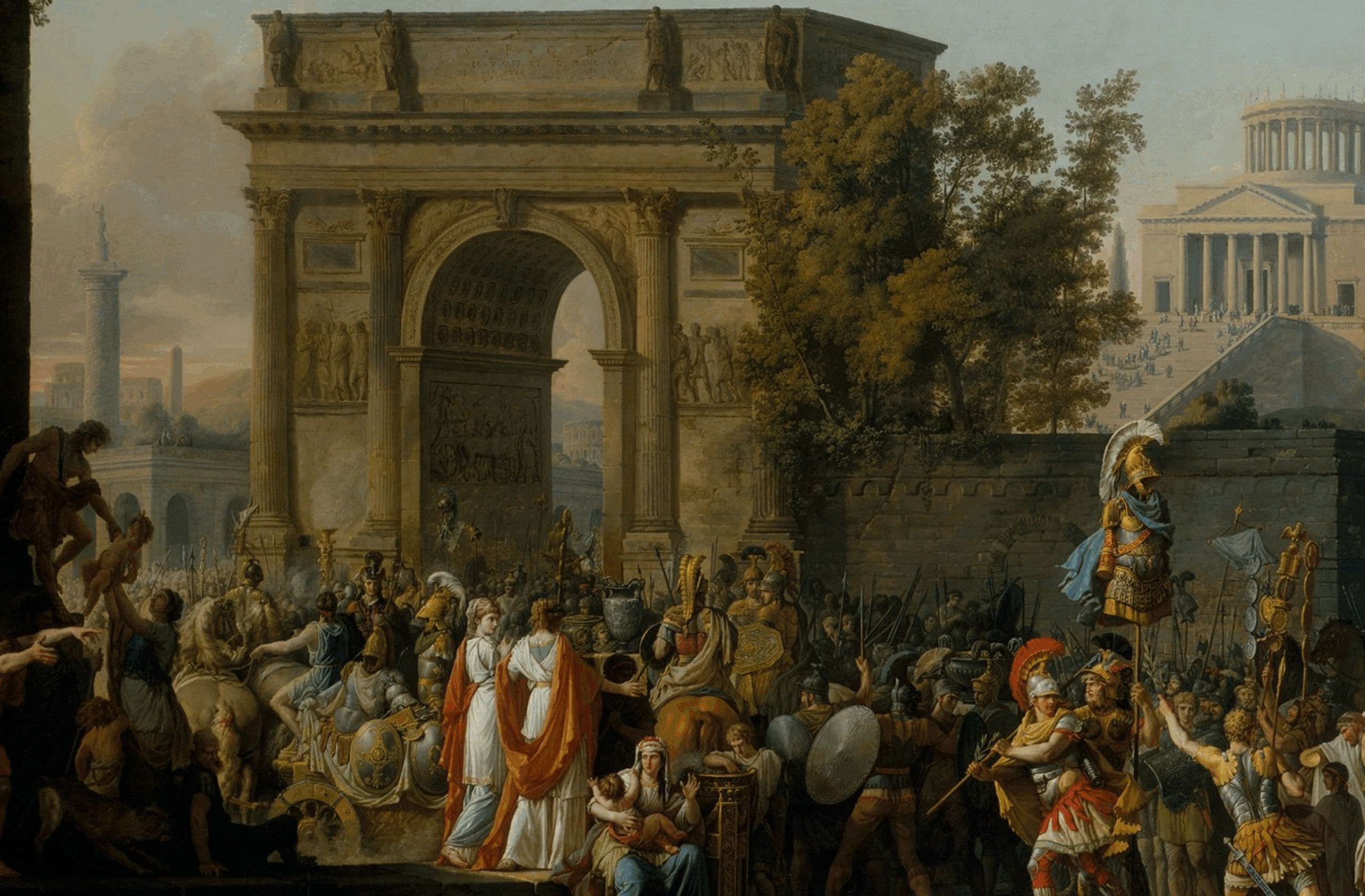
The Golden Thread: A History of the Western Tradition, by eminent historians Allen C. Guelzo and James Hankins, offers a compelling overview of the West’s defining traditions—from ancient Greece and Rome to medieval Christendom, modern Europe, and America—highlighting the enduring legacy of its art, literature, law, philosophy, science, faith, and its commitment to liberty and human flourishing.
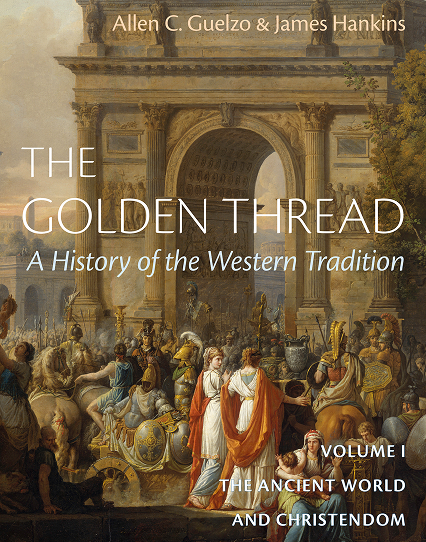
Volume I
The Ancient World and Christendom
Now Available
Where do the threads that form the Western tradition originate, and how were they woven together over the two and half millennia before 1500? What are the sources of our modern ideas about science, freedom, equality, law, good government, and virtue? These are the questions explored in The Golden Thread, Volume I: The Ancient World and Christendom, written by James Hankins.
Volume II
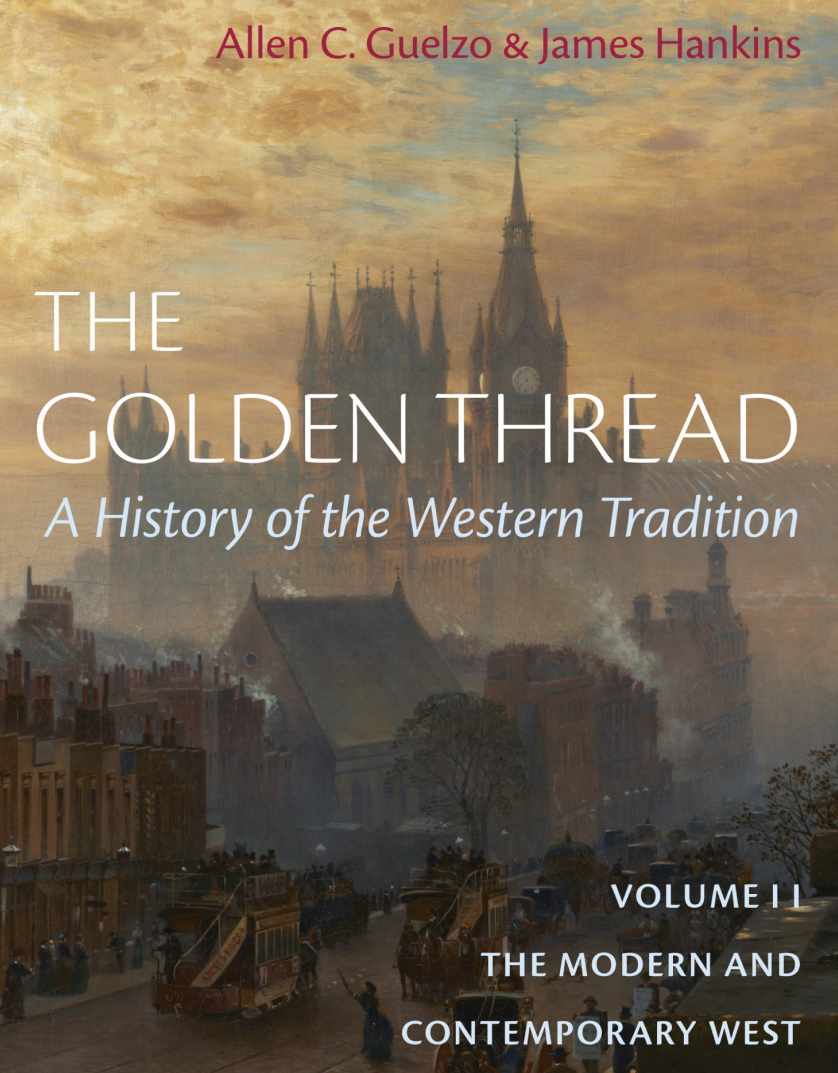
The Modern and Contemporary West
Shipping September 2025
With the Renaissance in Europe, the Western world experienced a long series of cataclysmic events that still reverberate in modern society. Written by Allan C. Guelzo, The Golden Thread, Volume II: The Modern and Contemporary West begins in 1500, when the Protestant Reformation brought an end of the Roman Catholic Church’s dominance over European states. It then turns to the rise of imperial powers that swiftly circled the globe, and to the explosion of intellectual, economic, and technological advancements sparked by the Enlightenment.


Available Winter 2025
In an official collaboration with Hillsdale College, this comprehensive curriculum is designed for structured, day-by-day instruction, ensuring a deep and rigorous engagement with the breadth of Western civilization. Tailored to suit a variety of classroom settings, it provides educators with a well-sequenced framework that fosters a richer understanding of the intellectual, political, and cultural foundations of the West.
“As a people who aspire to civility—to the goodness, truth, and beauty that our tradition, like a river, bears down us from the civilizations of the past—we, too, have a duty to study and cherish what we have been given by our ancestors, and to preserve it for our children.”
— Allen C. Guelzo & James Hankins
About the Authors

Allen C. Guelzo
Allen C. Guelzo is the Senior Research Scholar in the Council of the Humanities at Princeton University. He is the bestselling author, most recently, of Robert E. Lee: A Life. He is Director of the James Madison Program Initiative on Politics and Statesmanship and Senior Research Scholar in the Council of the Humanities at Princeton University.

James Hankins
James Hankins is Professor of History at Harvard University, where he focuses on Renaissance political thought, history of philosophy, and history of the classical tradition. His most recent book, Virtue Politics: Soulcraft and Statecraft in Renaissance Italy, was published by the Belknap Press of Harvard University in November 2019.

Sign up to stay informed on The Golden Thread textbooks and other offerings from Golden Thread Academic.

©2025 Encounter Books
Site by Beck&Stone